


From citations in Lincoln Park to sponsorships in the West Loop, here is how Chicago businesses earn the local links that move local rankings.
The City of Chicago licenses roughly 100,000 businesses, and Google sorts them locally with three signals: relevance, distance, and prominence. Prominence, the factor you can most influence, is “based on info like how many websites link to your business and how many reviews you have,” in Google’s own words. There’s no way to request or pay for a better local ranking. You earn it, and links are a big part of earning it.
This guide walks the whole stack in the order a Chicago business owner actually meets it: fix your citations first, then claim the Chicago-specific link sources, then layer on the strategies that fit your budget, staff time, and business type. We’re NfiniteLimits, an SEO and web development team based in Mundelein that has been building links for Chicagoland businesses for more than 10 years, so we’ll tell you what we’ve seen work here, and what each choice depends on.
How Links Power Local Visibility in Chicago
Links do two jobs for a Chicago business. First, they pass ranking weight: links are how Google discovers new pages in the first place; it finds pages primarily through links from pages it already crawled, per the SEO Starter Guide. Second, they build the prominence that lifts you in the Map Pack and local results for searches like “plumber in Pilsen” or “accountant near the Loop.”
A useful framing: links are one signal among many, not the whole game. Google’s starter guide is clear that its quality signals aren’t a checklist you can game; reviews, complete listings, and solid content all sit alongside links. But among the signals you can actively build, links are the one competitors most often neglect, and in a market as crowded as Chicago, that neglect is your opening.
One Chicago-market rule of thumb we stand behind: a single editorial link from a trusted Chicago news site outperforms dozens of cheap directory links. The SERP for your money keywords is won by relevance and trust, not raw link counts.
How Many Links Does a Chicago Business Actually Need?
Far fewer than the internet implies. Pull up the pages currently ranking for your target local searches and count their links; for most Chicago markets, that benchmark lands well under 150 referring domains, but your competitors set the number, not a generic rule.
And when you compare, compare against direct local competitors, not national giants. A pizza place in Bridgeport isn’t chasing the link count of a national chain; it’s chasing the two or three neighborhood spots ahead of it. Prioritize the relevance of each linking site and of the link itself over raw counts, every time.
Start With Citations and Directory Listings
Before any outreach, get your NAP — name, address, phone — consistent everywhere. A local citation is any online mention of those three things, whether it links to you or not. Inconsistency costs you twice: search engines use citations to verify you exist and are legitimate, and customers who hit a wrong number or an old address stop trusting the listing and stop calling.
The data aggregators and core directories
Start by claiming your Google Business Profile; it’s the first listing every Chicago business should own, and the one customers see most. Then the three main US data aggregators, which feed the ecosystem of smaller directories: Data Axle (Express Update), Localeze, and Foursquare (which absorbed Factual in 2020). Claiming and managing your listings with Data Axle and Localeze is free, so start there. Then your core set: Bing Places, Apple Maps, Facebook, Yelp, YellowPages, BBB.
Be honest about what citations do. A Moz survey put citations fifth among local ranking signals in 2018, and their ranking importance has almost certainly declined since; Google’s John Mueller has suggested name mentions are best seen “more as advertising.” They’re your foundation, not your growth engine.
Which directories are worth your time
Only pursue directories that rank for “[your industry] in Chicago”, or that Chicagoans actually use. An attorney wants FindLaw; a hotel wants TripAdvisor; a realtor wants realtor.com. A random directory that ranks for nothing is a waste of a lunch hour.
And don’t ignore mentions that never link. A write-up in a local blog that only names your business still builds prominence. Alongside that, don’t dismiss nofollow links: since 2019, Google treats nofollow as a hint for crawling and indexing, not a dead end.
One more tactic worth naming: barnacle SEO. If a directory already ranks on page one for your target Chicago search, getting listed on it puts you in the consideration set and earns you business before Google re-ranks anything.
The Chicago-Specific Link Sources
This is where most generic guides fail, because the actual Chicago sources are specific and checkable. Here’s your starting list.
The Chicagoland Chamber of Commerce
The Loop-based Chicagoland Chamber of Commerce includes a member directory listing on the Chamber website at every membership level, with benefits scaling by tier: e-newsletter features (10/8/6/4 by level), editorial newsroom features on the Chamber site (3/2/1), social media posts (6/4), and an Executive Insights Q&A web feature at upper tiers. The levels run President’s Circle, Leadership Circle, Premier, and Executive Connections.
For a B2B business, a chamber link or feature also puts you directly in front of other Chicago decision-makers — an awareness benefit that exists entirely outside SEO. That’s why chamber links fit B2B best; we’ll say which tier is worth it below.
Your neighborhood chamber, not just the citywide one
Choose Chicago’s directory lists the neighborhood chambers and business associations across the city, including the Chicago Chinatown Chamber of Commerce, Greater Englewood Chamber of Commerce, Lakeview East Chamber of Commerce, Lincoln Park Chamber of Commerce, Lincoln Square Ravenswood Chamber of Commerce, Northalsted Business Alliance, Rogers Park Business Alliance, Uptown United & Uptown Chamber of Commerce, West Central Association (West Loop), West Town Chicago Chamber of Commerce, Wicker Park Bucktown Chamber of Commerce, and the Chicago Area Gay and Lesbian Chamber of Commerce.
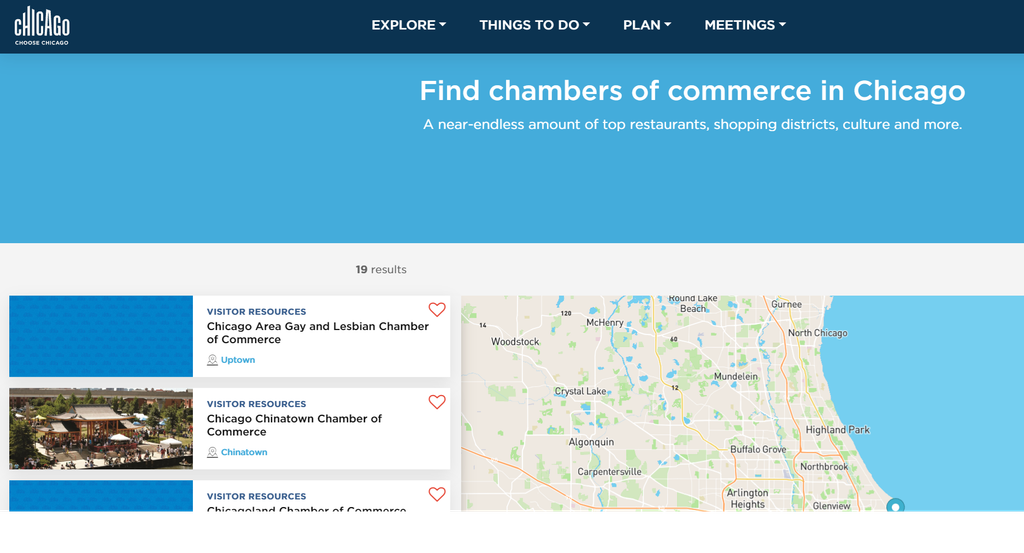
Join the chamber for your neighborhood: the Lincoln Square Ravenswood chamber if you’re on Lincoln Avenue up there, the West Central Association if you’re in the West Loop. A neighborhood chamber is cheaper than the citywide one, and its members are the businesses and residents most likely to actually click your link.
Local media pitch channels
- Crain’s Chicago Business: news tips by phone at 312-649-5200 or email at [email protected]. It also runs an op-ed channel and a nominations page for people and companies to be considered for its stories and lists.
- Chicago Tribune: preferred channel for news tips is email to [email protected] (a form as an alternative); letters to the editor of no more than 400 words go to [email protected].
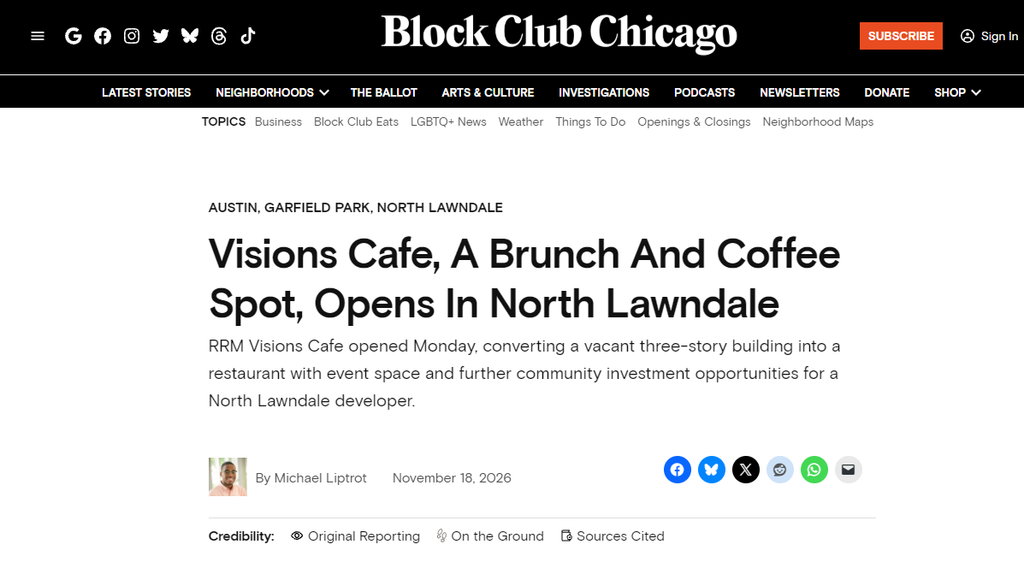
- Block Club Chicago: a nonprofit newsroom covering Chicago’s diverse neighborhoods, with a dedicated Business section covering openings, closings, and neighborhood business news — and a “Send News Tips” channel. If you’re opening a second location in Avondale, this is your outlet, not a national blog.
Pitch all three with a genuine local story — a milestone, a hire, a neighborhood investment — not “we do SEO, would you write about us?” One Tribune or Crain’s link is worth more than fifty spammy directory links.
The Strategy Stack, Sorted by What It Costs You
Every link tactic costs something: your time, your money, or your expertise. Sort your options that way and the stack stops feeling overwhelming.
Strategies that cost time, not money
- Host or sponsor a local meetup group. Offer your conference room to a group you find on meetup.com; you get a link from the group’s site. Free, and it puts your space in front of dozens of locals.
- Speak and appear. Speaking at local business expos, donating expertise to community organizations, and guesting on local podcasts each earn a link from the organization’s or event’s website.
- Reclaim unlinked brand mentions. Search your business name in quotes; where you’re named but not linked, a short polite email gets the link. This is the highest-conversion tactic on the list because the author already chose to mention you.
- Reclaim lost links and add internal links. Redirect old URLs that 404, and link between your own pages; your site is the one local site you fully control.
- Broken link building. Find local sites’ broken and outdated links (a crawler tool makes this fast) and offer your page as the replacement.
- Guest posting. Writing an article for someone else’s site: a local business blog, an industry publication, a Chicago-area outlet that accepts contributed pieces in exchange for a byline and a link. You find opportunities by searching for contributed-article pages and by noticing which sites in your orbit run guest bylines; a good pitch names a specific article idea, shows why you are the person to write it, and offers something their readers actually want. It depends on having a real angle, genuine expertise, and staff time to write so it pays off once your citations and easy local links are done and you have something worth saying. The quality bar is high: write for relevance and readers, not just for the link, because an article nobody reads earns you nothing but a line on a backlink report.
Broken link building and guest posting are two of the core tactics in how we build links for clients; they’re honest work that helps the site owner too.
Strategies that cost money
- Local sponsorships. Youth sports teams, charity runs, community events, school fundraisers. Find them with searches like
inurl:sponsors "Chicago",intitle:sponsors "Chicago", orintext:sponsors "Chicago". - Chamber membership. The Chicagoland Chamber’s paid tiers, and your neighborhood chamber’s dues. Worth it for B2B; less so for a restaurant.
- Paid event sponsorships. Sponsoring Chicago charities or festivals usually earns a link from the event’s official page — this is another tactic we run for clients, alongside content-as-link-magnets and guest posting, because it works here.
Whether a sponsorship is “worth it” depends on what you need from it: a link and a sponsorship-page mention (SEO value), local good will and signage on race day (brand value), or direct introductions to other sponsors (B2B pipeline). A $500 youth-team sponsorship often delivers all three. A five-figure gala table delivers mostly the third.
Strategies that cost expertise
- Write an ongoing column for your local paper or news site; outlets welcome knowledgeable contributors and usually include a bio with a link.
- Publish original local data. A study or statistic from your own customer data, a contractor’s cost-of-renovation data, or a realtor’s neighborhood price analysis is genuinely unique, and local outlets love a citable local number.
- Digital PR. Provide expert quotes to local news when something relevant happens in your industry. This is the most time-consuming and expensive tactic in the stack; it suits businesses genuinely committed to press coverage, and it’s the wrong first project for a first-time link builder.
- Cross-promote with neighboring businesses for mutual links and local roundups.
Which stack fits you?
It depends on your business type and your budget:
- B2B (law firms, accountants, agencies): chamber links, business-association links, and columns matter most; your buyers are other local decision-makers who see those pages.
- Consumer businesses (restaurants, retail, salons): food blogs, event sponsorships, and neighborhood press coverage beat chambers; your buyers read Block Club, not the Chamber newsletter.
- Little budget, DIY: citations and aggregators first (free), then unlinked-mention reclamation, then meetups and speaking. You’re spending evenings, not dollars.
- More budget than time: sponsorships, chamber membership, and eventually outsourcing the outreach itself.
Doing the Outreach
A few rules make the difference between links earned and emails ignored:
- Qualify by relevance, not Domain Authority. Most of the most valuable local links score low on DA or Trust Flow, because neighborhood blogs and small chambers aren’t big sites. The most relevant local link is from a business serving your own area, a Lakeview site linking to your Lakeview restaurant. Start prospecting with Google Maps around your location and radiate outward; neighborhoods and blocks surface link opportunities that city directories miss.
- Personalize every email. Reference their site, their work, or their neighborhood. Templates get deleted.
- Lead with value. A quote they can use, a local statistic, a free photo value-first offers raise response rates.
- One polite follow-up, five to seven days later. Not two, not five.
- Track every contact so you never pitch the same person twice or miss the “yes” when it lands.
Link Quality and Google’s Rules
Google’s link spam policy defines spam as creating links primarily to manipulate rankings. It names the things to avoid, and you should know them: buying or selling links for ranking purposes (money, goods, or services for links), excessive link exchanges, automated programs that create links, requiring a link in a Terms of Service contract, advertorials with passing links or optimized anchors, low-quality directory or bookmark links, keyword-stuffed links in widgets, widely distributed footer/template links, and forum comments with optimized links.
What you’re explicitly allowed to do
- Buying links for advertising or sponsorship is fine as long as they carry
rel="nofollow"orrel="sponsored". Paid placements should userel="sponsored"(preferred) orrel="nofollow", per Google’s outbound-link guidance. - UGC links (forums, comments) should use
rel="ugc". - Nofollow is for links you don’t want your site associated with, and yes, nofollow links to you still count for something, since 2019 Google treats nofollow as a hint for crawling and indexing.
Anchor text
Good anchor text is descriptive, reasonably concise, and relevant to both pages, per Google’s link best practices. Cramming keywords into anchors is keyword stuffing and violates spam policies. Don’t obsess: a link earned on a relevant page is already surrounded by relevant words, and keyword-rich anchors can become a liability when the pattern gets abused.
Toxic links and audits
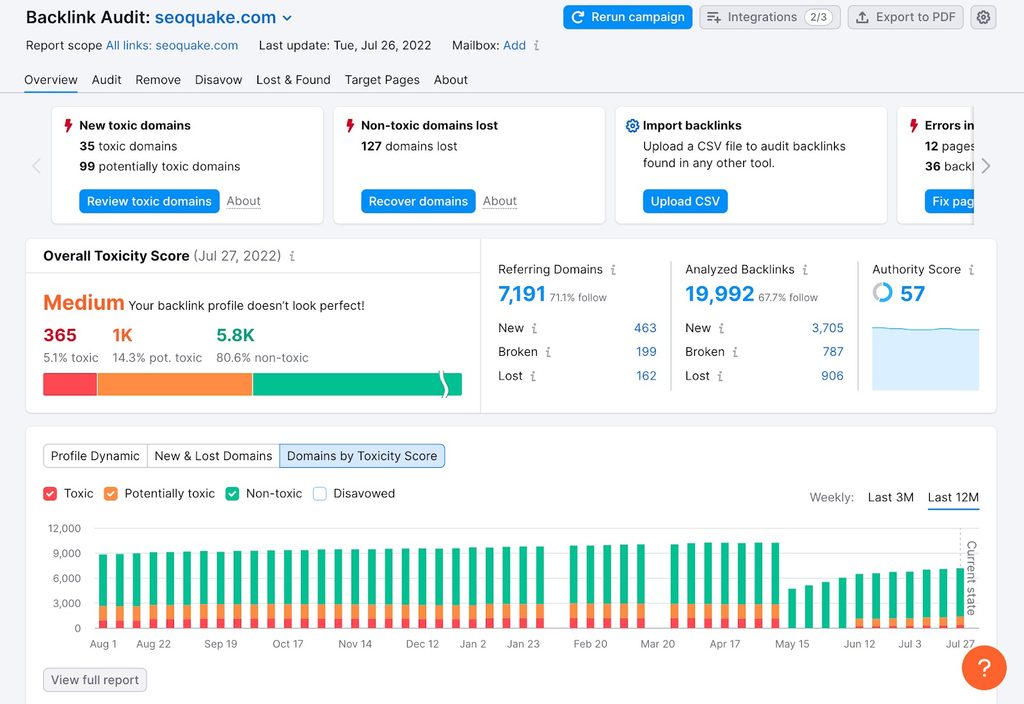
A toxic backlink comes from a spammy, irrelevant, or penalized site. Identify them through a backlink audit in Google Search Console or an SEO platform, and disavow them with Google’s Disavow Tool. Re-run the audit a couple of times a year or every 90 days if you’re actively building links, since new toxic links arrive whether you invite them or not.
If you hire help, know the red flags: guaranteed #1 rankings, promised instant results, unclear reporting, unusually cheap packages, and any hint of link farms or private blog networks. Google penalizes automated link marketplaces and PBNs, and the penalty lands on your site, not theirs.
What Results and Timing to Expect
Expect measurable ranking movement in roughly three to six months of consistent work. Nothing here is instant, and anything sold as instant should worry you.
Measure monthly, not obsessively:
- Referring domains growth: sudden spikes can signal spam you didn’t ask for.
- Authority of linking sites: are you still earning relevant, local links, or drifting into junk?
- Anchor text distribution: a mix of branded, generic, and keyword anchors; over-optimization is a liability.
- Organic traffic to your linked pages: the end goal, not links for their own sake.
- New toxic links: catch them before Google does.
In-house link building costs time instead of money; outsourcing costs more but delivers expert results without adding workload. The choice depends on whether you have the staff time and outreach skill, and if you don’t, a fixed-fee project with a team that doesn’t lock you into a contract (how we work, as it happens) is a sensible way to test whether outside help moves your numbers.
What Should You Know Before You Start Building Links?
How many backlinks does a Chicago business need?
There’s no fixed number. Pull up the pages currently ranking for your target Chicago search, count their links, and match your local competitors; that’s the only benchmark that matters. Then prioritize the relevance of each linking site over raw counts.
How long do link building results take?
Three to six months of consistent work is the typical window for measurable ranking movement. You may see individual wins sooner; a reclaimed mention or a directory listing can land in a week — but the ranking effect compounds over months. Measure monthly and don’t rebuild the strategy before the six-month mark.
Do nofollow links count for local SEO?
Yes, more than they used to. Since 2019, Google treats nofollow as a hint for crawling and indexing rather than a strict directive, so a nofollow link from a relevant Chicago site still passes discovery and context. Don’t build your whole strategy on nofollow links, but never turn one down from a site your customers actually read.
What makes a backlink toxic?
Toxic links come from spammy, irrelevant, or penalized sites, link farms, unrelated niches, or sites Google has already flagged. You find them through a backlink audit in Google Search Console or an SEO platform, remove what you can at the source, and disavow the rest with Google’s Disavow Tool.
Is buying links safe?
Paying for a link purely to manipulate rankings is link spam under Google’s policy, and it risks penalties. Paying for advertising or sponsorship is explicitly allowed as long as the link carries rel="sponsored" or rel="nofollow" — that’s the honest version of the same transaction. Flat-fee packages selling hundreds of backlinks are the riskiest form of all, and any agency guaranteeing #1 rankings or instant results is showing you its own red flags.
Do national links help local SEO?
They help your site overall, but they’re not what wins the Map Pack. Local rankings run on relevance, distance, and prominence, and prominence is built from local signals: Chicago news sites, neighborhood chambers, nearby businesses. A national link won’t hurt, but if the choice is a national blog or a Block Club Chicago feature, take the Chicago one.
Are sponsorships worth paying for?
Usually, it depends on what you need. Sponsoring a Chicago charity or festival typically earns a link from the event’s official page, plus local goodwill and, often, direct introductions to other sponsors. A modest youth-team or community-event sponsorship is one of the best link-per-dollar buys in local marketing; a five-figure gala table only pays off if the networking itself is the point. Just make sure paid placements carry rel="sponsored" so you stay inside Google’s rules.
If you’d rather have a Chicagoland team handle the stack citations, chambers, sponsorships, broken link building, the outreach, see how our link building service works, or say hello, and we’ll tell you straight whether you need it yet.